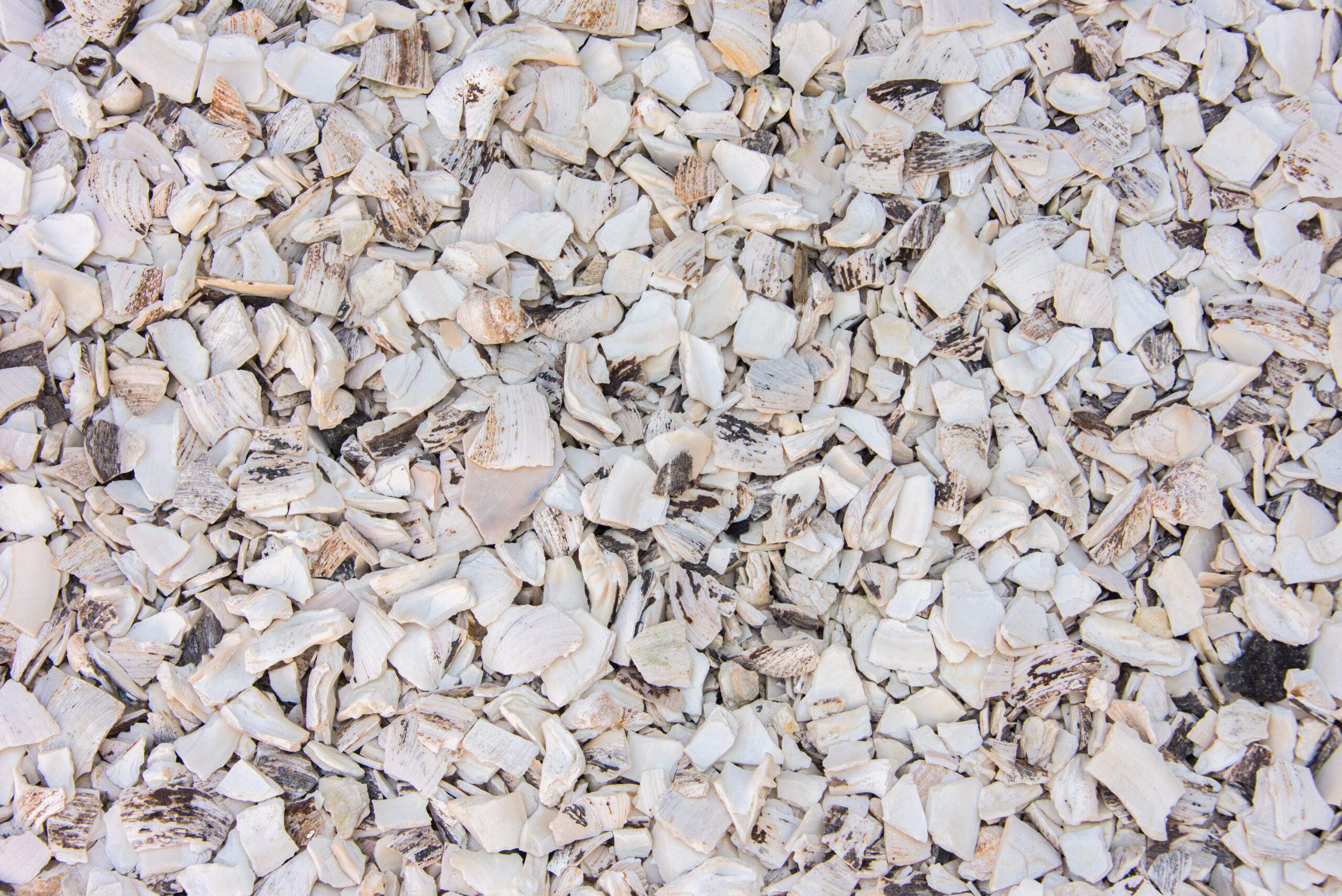
Keeping the shell out of your lawn
Shell migrating into the grass and beds is the most common complaint about these driveways, and it is almost entirely an edging problem.
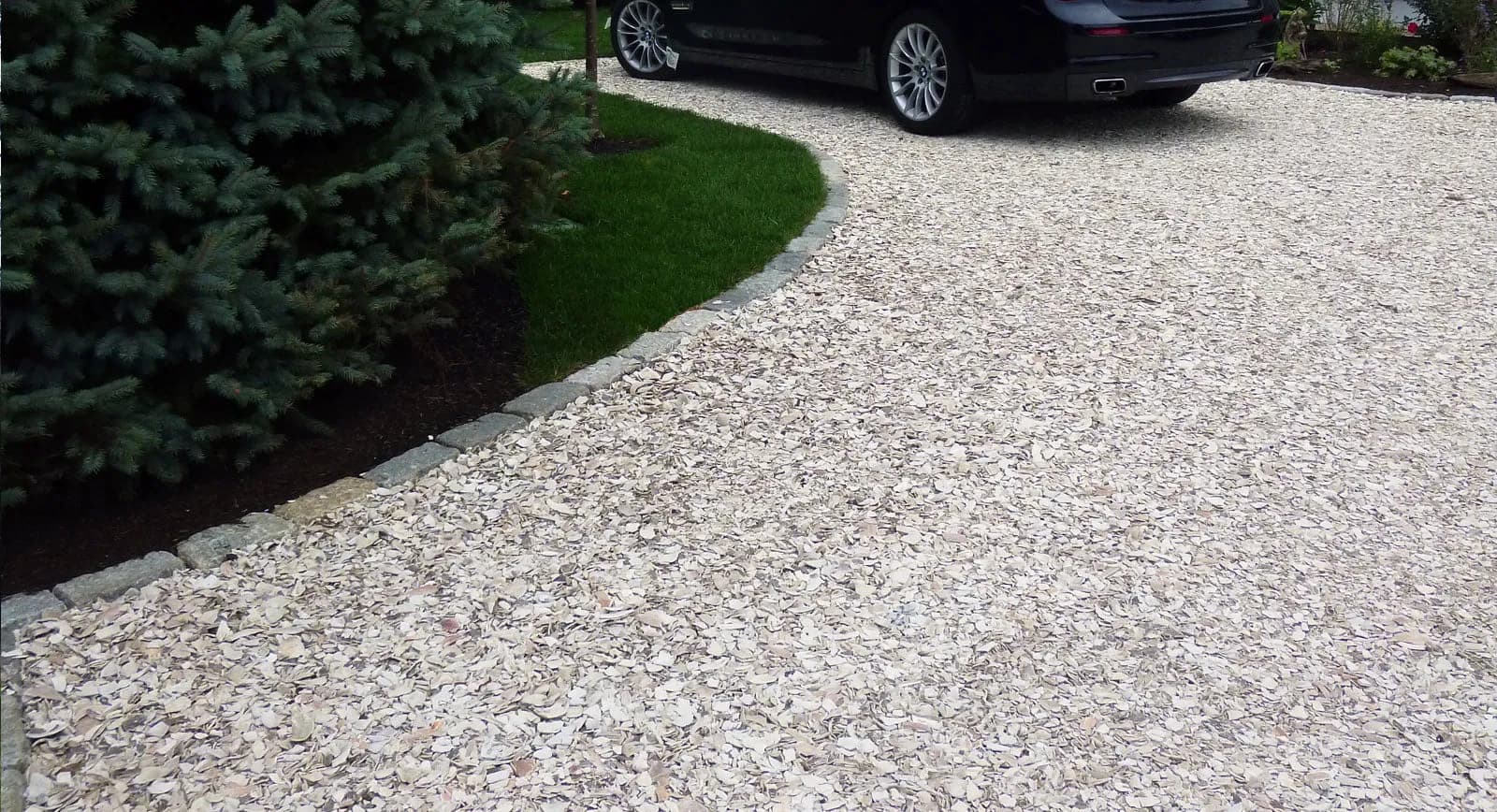
A loose surface driveway, whether it is crushed shell or crushed stone, has no natural boundary. Every car that runs slightly wide, every pass of a snow shovel, every heavy rain nudges material outward a little. Without something holding the line, a shell driveway will slowly spread into whatever is beside it, and you will be picking shell out of the lawn every time you mow.
What actually works
Something physical along the edge. The material matters less than the fact that it is there and set at the right height:
- Cobblestone or granite. The most durable, the most expensive, and the best-looking against shell. Sets into the ground and stays put for decades.
- Pressure-treated timber. Cheap, straightforward, and fine for ten years or so before it wants replacing.
- Steel or aluminium landscape edging. Nearly invisible once installed, good on curves, and it will not rot.
The height is the bit people get wrong. The edging wants to sit at or just barely above the finished shell surface. Too low and the shell rides straight over it. Too high and it catches shovels and mower decks.
Give the shell somewhere to sit
Even with good edging, a driveway heaped up proud in the middle will shed material outward. Getting the depth and crown right is half of it. The surface should sit slightly below the edging line, so the edge is genuinely containing something rather than being a strip of stone alongside a mound.
The upkeep is small
Two or three times a year, walk the edges and look for gaps, shifting, or places where grass has grown over the edging and started bridging shell into the lawn. A quick pass with a string trimmer along the boundary handles most of it.
Then rake whatever has crept out back onto the driveway. That is the whole job, maybe twenty minutes, twice a season.
If it has already spread
Shell in the lawn is a nuisance rather than a disaster. Rake back what you can, then get proper edging in before adding fresh material. Otherwise you are topping up a driveway that has no way of holding on to what you give it.